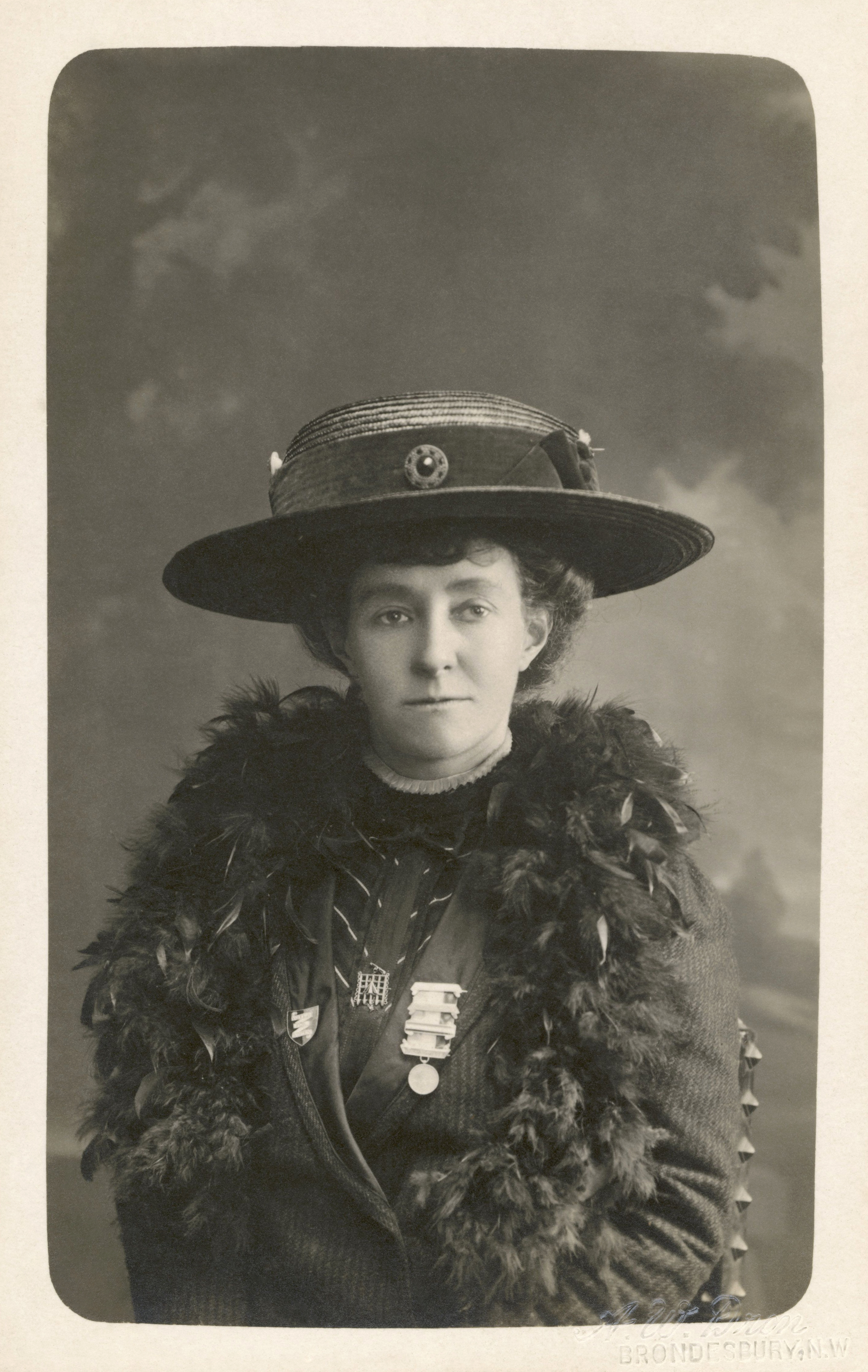
The women's suffrage movement in Britain grew out of the broader campaign for women's rights in the 19th century. In 1897, the National Union of Women's Suffrage Societies (NUWSS) was formed under Millicent Fawcett, advocating peaceful protest and petitioning Parliament. Frustrated by the lack of progress, Emmeline Pankhurst founded the Women's Social and Political Union (WSPU) in Manchester in 1903, adopting the motto "Deeds, not words." The WSPU's members — dubbed "suffragettes" by the Daily Mail — employed civil disobedience, chaining themselves to railings, smashing windows, and disrupting political meetings.
The suffragettes faced brutal repression. Under the "Cat and Mouse Act" of 1913, hunger-striking prisoners were force-fed, a painful and dangerous procedure. Emily Davison became a martyr to the cause when she stepped in front of King George V's horse at the Epsom Derby on 4 June 1913 and died from her injuries. The WSPU's campaign escalated to including arson and bombings, though the organisation maintained that no lives were ever endangered. In 1910, a "Conciliation Bill" that would have granted property-owning women the vote passed its second reading but was ultimately shelved by Prime Minister Asquith.
World War I proved the watershed moment. With men away fighting, women entered the workforce in unprecedented numbers — as nurses, munitions workers, bus conductors, and police officers. Their vital contribution to the war effort changed public opinion. The Representation of the People Act 1918 granted the vote to women over 30 who met property qualifications. Equal voting rights with men (over 21) came a decade later with the Equal Franchise Act 1928. Emmeline Pankhurst died in 1928, just weeks before the Act passed. Today, the suffragettes are remembered as pioneers who used extraordinary courage to secure one of the most fundamental democratic rights.